TMS is a technology that uses strong but safe magnetic fields to both stimulate and inhibit
areas of the brain. The procedure is used in neurological diagnostics (TMS) and in treatment (rTMS) of neuropsychiatric disorders.
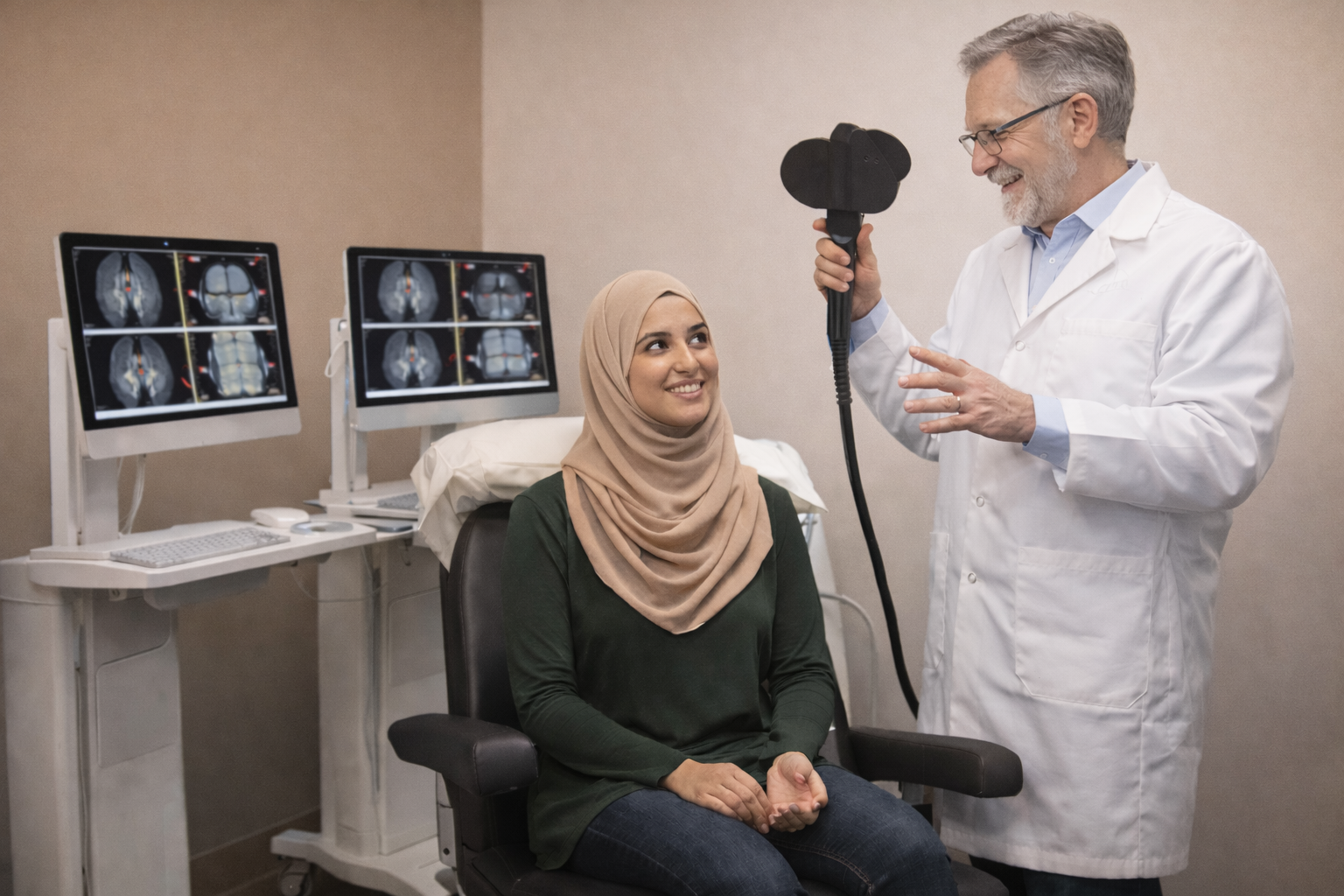
rTMS uses brief magnetic pulses to gently activate specific areas of the brain. During treatment, a magnetic coil is placed on the scalp, and it delivers repeated pulses in the brain and supports healthier brain activity. The procedure is painless for most people, requires no anesthesia, and allows patients to return to normal activities right away.

rTMS uses a rapidly changing magnetic field to induce small electrical currents in targeted cortical regions. Repeated stimulation modulates the excitability of these networks—either increasing or decreasing activity depending on the frequency used.
rTMS can be useful for a variety of conditions, such as depressive disorders, substance abuse disorders, post-traumatic stress disrder as well as conditions like chronic pain, chronic fatigue syndrome, fibromyalgia and much more. Latest resarch even shows effects for migraine, post-stroke disabilities and psychotic symptoms like hallucinatory voice hearing.
Over a treatment course, it helps normalize dysregulated circuits involved in conditions like depression, leading to symptom improvement. Furthermore, rTMS can improve caretaker burden and provide long-term relief from chronic conditions by incorporating maintainence sessions.
Even though rTMS therapy is genereally well-tolerated, some patients might experience scalp discomfort, or headaches during stimuation. While these symptoms subside eventually, it is always recommended to use rTMS under the supervision of a licensed health practioner with neurostimulation experience in order to avoid serious adverse effects.

Theta Burst Stimulation is an advanced, faster version of rTMS that delivers bursts of magnetic pulses in a pattern inspired by natural brain rhythms called theta waves. Although the stimulation pattern is more compact, it achieves similar therapeutic effects to standard rTMS in a much shorter time—often just a few minutes. Its efficiency and short session length make it a convenient option for people seeking effective treatment with minimal time commitment.
Theta burst stimulation (TBS) delivers very rapid bursts of magnetic pulses in a pattern that mimics the brain’s natural “theta” rhythm. Both intermittent (iTBS) or continuous (cTBS)—TBS can be used to increase or decrease activity in the targeted brain network, helping normalize circuits involved in neuropsychiatric conditions.
The best known indication of TBS is treatment-resistent major depressive disorder. Emerging research shows that it can even be effective for conditions like obsessive-compulsive disorder, tinnitus, chronic pain conditions, addiction and generealised anxiety disorder. Modern protocols of TBS can be used for motor and language recovery as well as post-stroke rehabilitation and cognitive enhancement.
Similar to rTMS Therapy, TBS offers a non-invasive and well-tolerated treatment approach. It can also provide durable relief from depressive symptoms at an accelerated rate. It offers shorter stimulation sessions with effects comparable to standard rTMS. The patterned "theta" bursts offer stronger neuromodulatory effects with fewer pulses.
While it is generally considered safe, like all brain-stimulation treatments, TBS too, can cause some side effects. These are usually mild and temporary. Some common side effects include headache and scalp discomfort. Some patients may report hearing problems or dizziness directly afterf the stimulation session, but these symtoms tend to subside after some time. The risk of severe adverse effects is minimal.