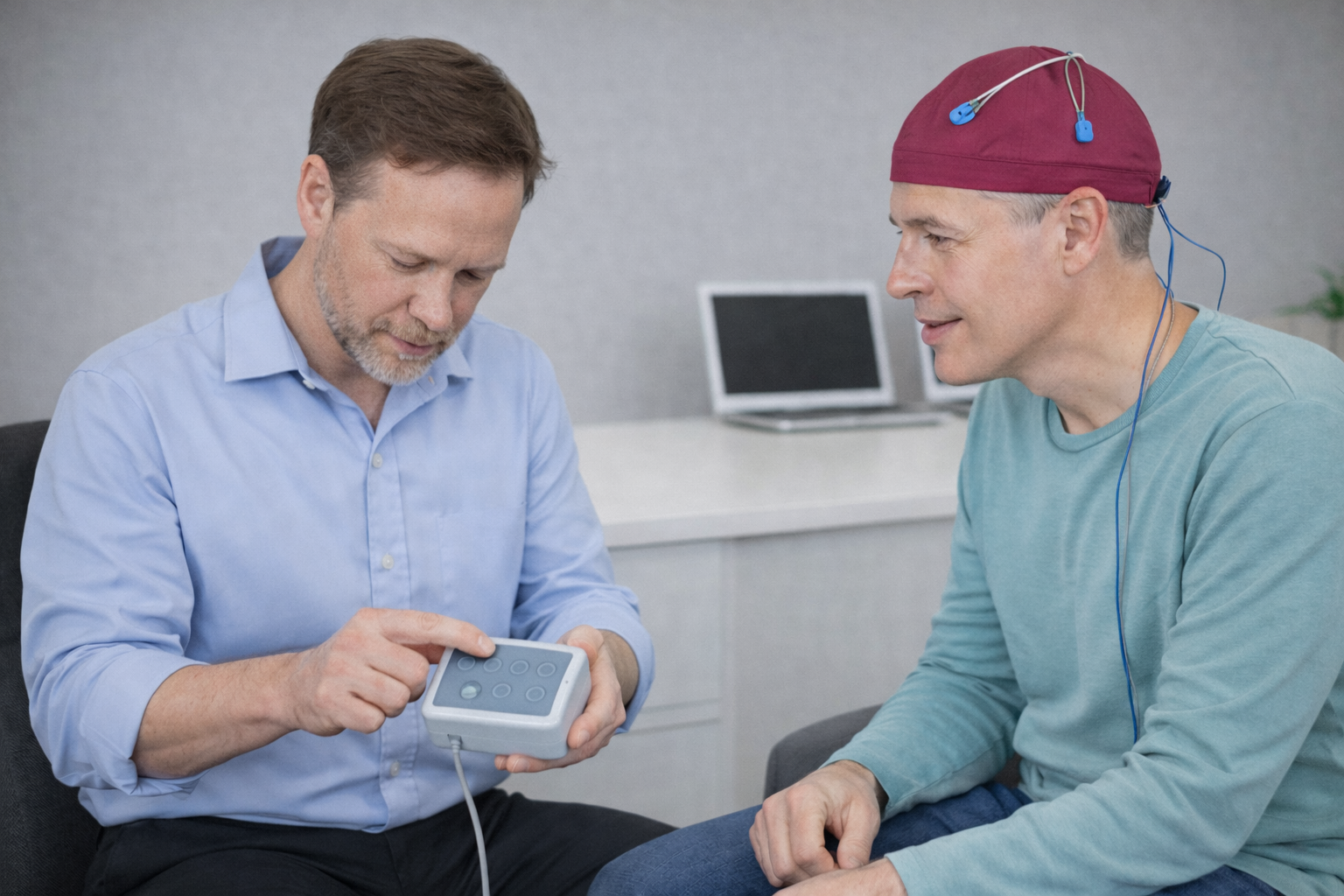
tVNS calms overactive nerves and is approved for epilepsy, chronic migraine, depression, and Prader–Willi syndrome. Studies additionally show—often a reduction of ≥50% in epileptic seizures—as well as improvements in depression, anxiety, and chronic pain. Further potential applications include, among others, Crohn’s disease, stroke rehabilitation, tinnitus, sleep disorders, and irritable bowel syndrome.
tES is a non-invasive procedure that applies weak electrical current through electrodes placed on the scalp to influence brain activity. Two main tES methods include transcranial Direct Current Stimulation (tDCS) and transcranial Alternating Current Stimulation (tACS). tES methods can be both applied as a stand-alone treatment or combined with other therapeutic interventions.
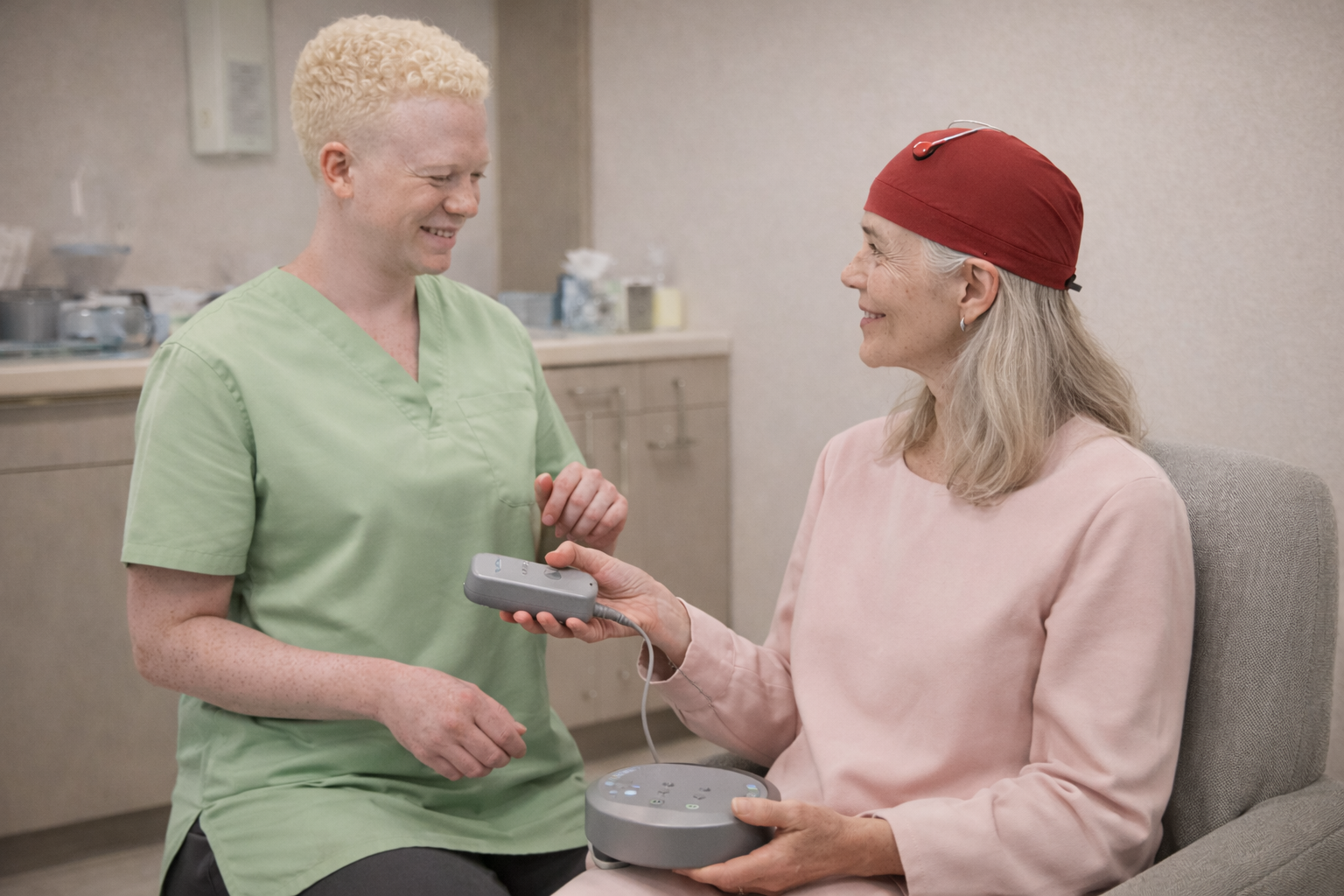
Transcranial Direct Current Stimulation
Transcranial Direct Current Stimulation (tDCS) is one of the most commonly used non-invasive brain stimulation technique that delivers a very low intensity, safe electrical current with neuromodulatory properties. The University Medical Center Göttingen has been one of the key centers in researching and developing this method.
How Does It Work?
Through electrodes placed on the scalp, the tDCS electrical currents modulate the brain excitability by subtly prompting the electrical balance of neurons making them more or less likely to activate rather than activating them directly.
Treatment Indications
tDCS offers a promising approach against post-stroke motor deficits, amyotrophic lateral sclerosis, major depressive disorder, cognitive impairments, chronic fatigue, Parkinson's Disease, attention-deficit/hyperactivity disorder as well as addiction, among others. this method.
Benefits
Potential benefits of tDCS include incremental improvements in mood, reductions in pain perception, and enhanced motor function or cognitive performance. Repeated application of tDCS can alter brain function at the network level, offering a non-invasive way to support rehabilitation
Potential Side Effects
tDCS is generally well tolerated, with adverse effects being mild and transient. Rare complications, such as marked typically result from improper execution or protocols. Clinician oversight, adherence to recommended parameters, and patient care help ensure patient comfort and safety.
Transcranial Alternating Current Stimulation
Pioneered by Andrea Antal in Göttingen, tACS is a method for influencing oscillatory brain activity. The alternating current aims to interact with the brain’s natural electrical rhythms (often called brainwaves).